

Pulp & Paper Process Chemicals
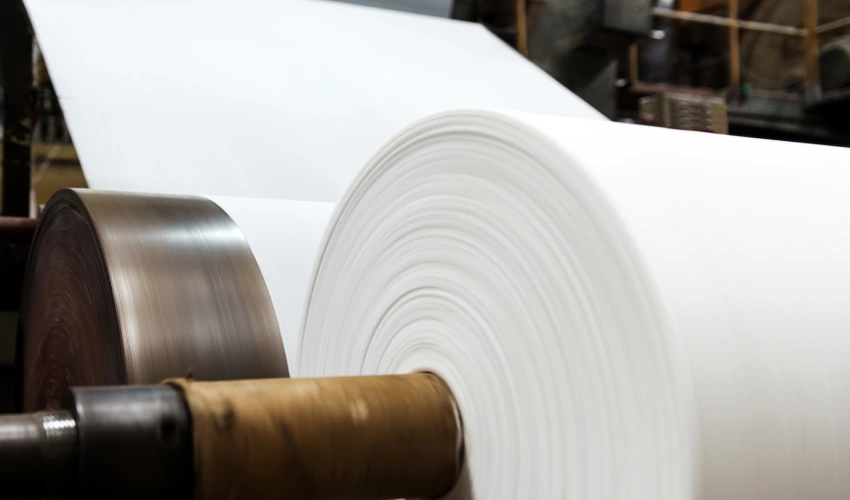
Comprise of a range of organic and inorganic contaminant control products for pulp and paper process treatment. These products combine the benefits of stickies/pitch control agents, scale control agents, detackifying agents, fixatives and fabric cleaning & conditioning. Typical applications include pulping process applications, printing and writing, newsprint & deinking, packaging & board and tissue & towels
Wire passivation agents modify the surface of the forming fabric, reducing its surface energy to prevent contaminants from spreading / being caught in the wire. Originally designed to keep forming fabrics free of stickies, wire passivation agents has proven to be effective against pitch as well. Wire passivation agents are usually applied to the sheet side of the forming fabric, preferably after the final cleaning shower.
Dry Strength Resin
The use of dry strength aids provides the following benefits:
- Increased paper strength
- Increased filler levels
- Increased stiffness
- Increased bulk and drainage
- Inclusion of weaker fibres
- Reduced stock refining
Dry strength aids are typically added by stock addition, spraying or size press application. SRIVILAS HYDROTECH offers a range of dry strength aids including cationic, anionic and amphoteric polymers. These may be selected according to the desired strength benefit with due consideration to the paper furnish and paper machine chemistry.
Wet Strength Resin
For the production of wet strength paper and board requiring wet strength properties, such as sack, bag kraft, packaging board, poster, wall paper, label paper, kitchen towels, facial tissue, tea bags, coffee filters and other food contact papers.
Wet end additive formulates to impart dry strength to paper. It offers superior retention and performance at the wet end. The improved strength characteristics of Wet Strength resin include STFI, Concura, Burst, Tensile, Ring Crust and Dry Rub. These benefits improve the papermaking operation by enabling new grades, lower cost furnish increased machine speed and reduced steam demand. Wet Strength Resin is recommended to be added at the thick stock system shortly before the dilution at the fan pump.
Offering series of Oxidising and Non-Oxidising Biocides for complete protection against microbial contamination, Biocides/Microbial Control agents provide better protection over various microbiological related problems and allows:
- No slime related breaks / holes / defects hence Improved runnability
- Improved paper quality due to reduced level of rejects / off grade paper
- Longer time between shuts
- Efficient use of additives
- No odour in surrounding environment or in paper
- Less microbiological loads to waste water treatment
Microbiological control agents are typically applied in the following areas of the paper machine:
- Additive systems
- Size press
- Coater
- Fresh water sterilisation
- Catalase control in deinked pulp
Felt cleaners and conditioners enable pulp dryers and paper machines to run continuously without the need to stop for cleaning of the press felts, thus significantly enhancing productivity. The selection of cleaners and conditioners would depend on the type of contaminant in the felt, and the use of a proper conditioner slows down the rate of your felts becoming dirty.
The use of felt cleaners and conditioners facilitates good maintenance of the press felts and would provide the following benefits:
- Maximization of press dewatering
- Reduced press section breaks
- Reduced sheet moisture streaks
- Improved evenness of size press and coater pickup (on paper machine)
- Improved evenness of pulp sheet (no curling) on pulp dryers
- Increased machine speed or reduce steam use in the dryer section
Press felt cleaners and conditioners are typically applied through the felt showers. Different grades of paper, machine types / sizes and other operating conditions have different requirements, ranging from traditional batch cleaners to Batch-On-The-Run to continuous conditioning. Different applications would also call for different feed points and concentrations. Some applications may require dedicated chemical showers in the press section, while others make use of existing lubrication or cleaning showers.
Without an effective retention program, fibres, fines and fillers such as calcium carbonate, sizing agents, dyes, OBA, starch etc are not retained on the sheet. They are re-circulated in the white-water system causing deposit problems, increase in microbiological growth that lead to sheet breaks and sheet defects. Poor retention of wet additives would also increase chemicals cost.
A good drainage program will allow mills either to increase machine speed if it is steam limited or reduce steam consumption if it is speed limited. Retention and drainage aids become more critical as mills seek to increase fillers in sheets, use more recycled fibres and increase extent of closure of water system.
A good and well-designed retention and drainage program provides the following benefits:
- Increased machine run ability
- Higher usage of fillers or less expensive fibres
- Reduced deposits
- Reduced sheet defects
- Reduced additives (sizing, OBA, dyes, starch, wet and dry strength) cost
- Reduced sewer loss
- Reduced downtime for wash ups
De-inking chemical is a proprietary formulation comprised of various Chemicals and necessary surface-active components for the detachment and collection of ink during the recycling of all types of recovered fibres used in the manufacture of recycled paper grades.
De-inking chemicals can be added into pulper directly without any modification of equipment in current process. Used for removing ink from recovered newsprint, magazine or other wood containing paper grades. It can also be dosed in special cells called the Flotation/De-inking cells before the washer.
Digester Cooking Aid
Digester cooking additives are used to enhance cooking liquor penetration throughout the chips as well as to improve the diffusion process, thus facilitating uniform cooking.
Benefits include:
- Reduction of Kappa number variations
- Reduction of cooking liquor consumption
- Reduction of knotter rejects
- Reduction of bleaching chemicals requirement
- Reduction of black liquor solids to recovery
- Improvement on pulp de-resination
- Improvement on pulp viscosity
- Improvement on washing operations and cleaner pulp
- Increased production rate
- Lowering of DCM Extractives content in pulp
Digester additives are normally dosed at the suction of the white liquor dosing pump
Our cleaning products in the form of boil out programs are specially formulated to address various deposits / scales commonly found in paper making system, including:
- Other alkali soluble materials
- Solventized cleaners
- Oxidant based cleaners
- Specially formulated cleaners for coating, starch and other additives
Benefits
- Improved runnability
- Reduced levels of rejects / off-grade papers
- Reduced startup problems
- Reduced downtime required for cleaning
- Ensure consistent results
- Development of optimum procedures
Boilout chemicals are typically applied in the following areas of the paper machine:
- Thin stock
- Long loop
- Size press
- Coater
- Additive systems
Scale formation occurs in different areas of the pulp making process. These include the digester heater, screens in washing, filters, drums (plugging) in washing / bleaching, along the pipe lines, control sensors, liquor evaporator, vacuum pumps, scrubbers and tanks surfaces. These could lead to significant negative impact on productivity and product quality. Whether your system suffers from calcium carbonate / oxalate, barium sulphate, sodium carbonate / sulphate or silicate deposits, hard or soft scales, we have the right products to give you control over deposits. Scale control agents inhibit the formation of scale on equipment’s surface, pipe lines, control sensors, vacuum pumps etc., thus ensuring optimum efficiency.
Scale control agents could be applied to all areas defined above or at any other areas of which scale formation may take place, including paper machine equipment such as screen, head box slice, showers, vacuum pumps etc.
Poor roll release is one of the key challenges faced by paper mills, which leads to higher press section draws and the following problems:
- Low sheet stretch
- Increased press section breaks
- Poor printability from fiber rising
- Increased linting and dusting
Srivilas’ offered roll release aids including film splitters, passivators and lubricants. These products coupled with cost effective feed rates provide a nearly immediate improvement in roll release. Roll release aids are typically applied through one or both press roll lubricating showers.
Srivilas’ offered defoamers either as Concentrates, Water Based, Oil Based, Emulsions used effectively in wet end, size press, coating, effluent treatment plant, brown stock washing and various other applications in the pulp and paper process. The use of these products will reduce sheet defects such as pin holes, improve drainage and pulp washing thus facilitating smooth runnability.
The benefits of using defoamers is to solve the following challenges
- Basis Weight Variations
- Reduce Drainage
- Breaks
- Microbiological Growth
- Reduced Cleaner Efficiency
- Reduced Operating Capacity
- Sheet Surface Defects
- Deposition
- Housekeeping/Safety
- Loss of Additives
- Poor Sheet Quality
- Poor Consistency Regulation
- Poor Chest Level Control
Defoamers are generally applied at the Paper Machine, Additives systems, Size Press, Coater or Effluent Plant.